
LLM Assistant
Consulting, support, and sales via the Claude and OpenAI APIs. Answers are derived from live data and tools, not from the model's memory.
eCommerce web agency from Tornesch and web design Hamburg - online shops, company website creation - Magento - WordPress - WooCommerce


 DE
 EN
Four custom extensions in the Adobe Commerce Marketplace – from the same practical experience as these projects. Marketplace profile
 Complete migration and redesign of Industriearmaturen-Shop24.de
 Magento 2 online shop for the garden trade – Hermann Meyer
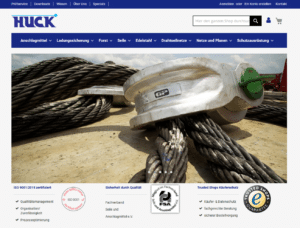 Before & After: Storetown-Media's comprehensive digital strategy for Huck GmbH
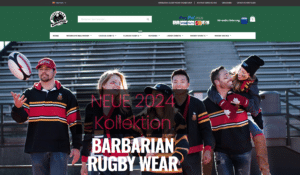 Barbarian.eu Magento 2 ProjectAll Magento references
Our checkout plugin is located in the official WordPress.org directory – reviewed according to its guidelines. View in directory
 Case study of the booking portal Fewo-Nordostsee.de with WordPress (homey)
 hairdoshop.de – the same shop built in WooCommerce and Shopify
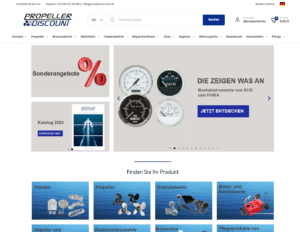 Propellerdiscount WooCommerce Shop Redesign
 WooCommerce wine shop in 3 languagesAll WooCommerce references
Shopware 6 from Tornesch: Switching from Shopware 5, custom themes and integration with the merchandise management system.
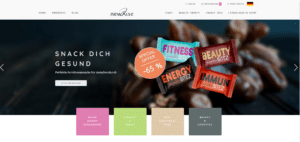 Shopware project newxise
 New Shopware shop
 Magento reference for selling vegan food: Happy CheezeAll Shopware references
Migration of existing shops to Shopify, custom themes and the mandatory German information.
hairdoshop.de – the same shop built in WooCommerce and ShopifyAll Shopify references Company websites and portals based on WordPress – the same foundation on which our plugins are also created.
Case study of the booking portal Fewo-Nordostsee.de with WordPress (homey) Custom WordPress theme for a North Sea holiday home – The Blue House in FriedrichskoogWooCommerce shop for hair extensions – the multilingual hairdo online shop
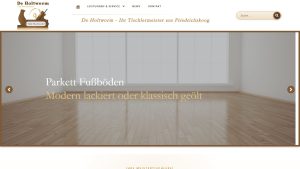 Carpenter's website with WordPress – De Holtworm Carpentry in FriedrichskoogAll WordPress references
 Smart One Page CheckoutFewer abandoned checkout processes
 Product Attachment ProFiles on the product page
 B2B RegisterDealer check & activate
 Surcharge MaxCalculate surcharges flexibly
 EU Tax Rate Sync FreeEU tax rates automatically updated
 Smart Checkout FreeLegally compliant POS for WooCommercePro version
 Barrier guide FreeBFSG review of the actual purchase routeWhat the BFSG requires
 Custom CSS & JS Manager ProCode per page, update-proofFree version
In e-commerce since 2012
Online shops, websites and everything related to them – from Hamburg / Tornesch in the Pinneberg district.
Owner of Storetown Media · since 2012
I develop LLM assistants, agent-based workflows, and data pipelines that are reliable in everyday use: based on knowledge derived from real data, clear guidelines, and measurable costs. This is backed by 14 years of practical experience with online shops, ERP integrations, and interfaces.
Tornesch near Hamburg · Remote projects throughout Germany
Focus areas
AI is worthwhile where it works reliably. That's why data quality, security, and operation are integral to my projects from the very beginning.
Consulting, support, and sales via the Claude and OpenAI APIs. Answers are derived from live data and tools, not from the model's memory.
Multi-stage processes involving web search, structured output, and independent fact-checking. A human makes the final decision where it matters most.
Feed pipelines, ERP and accounting interfaces, migrations: with validation, quarantine and a way back for every step.
Hardening, monitoring, and incident response for Magento and WordPress. Deployments with verification steps and automatic rollback.
Projects 2025–2026
The examples are either operational or about to launch. All key performance indicators (KPIs) have been measured.
01
LLM assistants for consulting, landlord support and sales
storetown-media.de · fewo-nordostsee.de · hairdoshop.de (Pilot) · since 07/2026
Three assistants on the Anthropic API, connected via their own server endpoints – the API key never leaves the server. The knowledge comes from the live database: prices, products, appointments, locations. Sophie works directly with the shop data using five tools and adds items to the shopping cart with just one click from the customer. Ole and Johnny don't save any chats. The model is interchangeable for each assistant via configuration – I test new model generations against the same test questions before switching.
Captain Ole is active on this page – feel free to ask him a question.
02
Agent pipeline for event texts
fewo-nordostsee.de · 06–09/2026
For each appointment, two model calls utilize server-side web search: the first researches and writes the output, the second verifies each statement against the source. Output is enforced via a JSON schema; web content is treated as data, not instructions, and "better empty than guessing" is the strict rule. Publication occurs automatically or only after approval.
03
Price comparison with feed pipeline and release engineering
Own product · since 09/2026 · Launch in preparation
Offers from affiliate and merchant feeds are streamed, validated, assigned across merchants, and evaluated against the 90-day average. Suspicious deliveries—such as massive price spikes—are quarantined instead of being included in the catalog. Every data version is traceable via checksums and rule versions; a new release is only activated when the build confirms it.
04
Security for Magento 2 and WordPress
Customer projects and in-house systems · since 09/2025
Forensic analysis of logs and malicious code, cleanup, hardening, and GDPR compliance – in the event of real attacks on online shops. New security rules are tested against 30 days of real-world access before going live. Integrity monitors compare core checksums and automatically restore manipulated files.
05
So that ChatGPT, Claude & Co. can accurately describe a company
7 web projects · since 06/2026
A curated llms.txt file, a crawler strategy that differentiates between response and training crawlers, and clean, structured data. A proprietary testing tool uses LLM to pose realistic user questions and measures whether a brand appears in the answers – with a fixed daily budget.
AI in e-commerce at Storetown Media06
Plugins for WooCommerce and Magento
wordpress.org · Adobe Commerce Marketplace · Open Source
STM Barrierelotse checks checkout processes according to WCAG 2.1 AA and generates the declaration according to § 14 BFSG; a word choice gate in the corporate identity prevents inadmissible claims of conformity. STM Smart Checkout Pro checks the VAT ID number via the EU VIES interface – if it fails, there is no tax exemption.
Operation
I openly use AI agents: they write code, check each other's work, and conduct extensive research. I am responsible for the architecture, quality, and operation.
01
Define the goal, data flow, and boundaries. Decisions are logged before the first line of code is written.
02
Claude Code is implemented using Claude Fable 5.1 and Opus 5.5 in parallel development phases. Every change is documented as a pull request.
03
A second model – GPT-6 Astra in OpenAI Codex – tests according to fixed rules. Each finding is first marked with a failed test, then corrected.
04
Only a human can grant access. After that, monitoring, alarms, and a tested return path take over.
Models in use · As of September 2026
I implement new models as soon as they are available and pass my tests. The applications are built to be model-independent – switching is a configuration change, not a complete overhaul.
Guardrails
Assistants provide answers based on live data and tools. The system simply states what is not verifiable.
Websites, tool results, and inputs are marked as data – the most effective protection against prompt injection.
Usage is recorded per call; budgets and rate limits are part of the architecture.
Verification step before activation, backup before that, automatic rollback if the health check fails.
Every error becomes a documented rule and is secured with a test.
No chat logs, visible AI labeling, and understandable privacy notices.
Tools
AI & Agents
Development
platforms
Data & Operation
Career
since 2026
Focus on AI Engineering
LLM assistants, agentic workflows and data pipelines in production.
since 12/2015
Owner & Managing Director, Storetown Media
Online shops, interfaces and operations for B2B and B2C – in Tornesch near Hamburg.
2012 - 2015
Founder, Webdesign-Kummert
Websites, online shops and digital marketing in Pinneberg.
Academic background
Master of Arts (MA)
Christian-Albrechts-University of Kiel; previously social insurance specialist at AOK Hamburg.
Languages:
German, English, French
Fluent in English, good in French.
FAQs
Jan-Hendrik Kummert is the owner and managing director of Storetown Media in Tornesch near Hamburg and has been self-employed in e-commerce projects since 2012. His focus today is AI engineering: LLM assistants, agent-based workflows and data pipelines for online shops and SMEs – based on 14 years of practical experience with Magento, WooCommerce, Shopware, Shopify and ERP integrations.
In agentic engineering, AI agents handle the implementation, while a human is responsible for the result. In my project, Claude implements code in parallel workstations, a second model checks according to predefined rules, and automated tests ensure every step is safe – only a human can release the final version. This approach resulted in 87 pull requests for the price comparison site Prizavo in three weeks.
AI coding agents handle the implementation; I'm responsible for architecture, requirements, review, testing, and release. Every change goes through automated checks and an independent second review as a pull request – only a human can approve it.
In development, I use Claude Fable 5.1 and Claude Opus 5.5 via Claude Code, and as an independent reviewer, I use GPT-6 Astra via OpenAI Codex. The applications run Claude Opus 5, Sonnet 5, and Haiku 4.5 via the Anthropic API and the OpenAI API – small, fast models for chats, and larger ones for research and review. The applications are built model-agnostic: I implement new models as soon as they are available and pass my tests.
A dedicated server endpoint in the shop or WordPress interface forwards requests to the language model – the API key remains on the server. Knowledge is drawn from the live database, such as products, prices, or dates, or via tools that the model specifically calls: product search, availability, shipping costs. Actions like "add to cart" only occur after a customer click and with server-side validation.
The knowledge comes from live data and tools, not from model memory. Limits of statements and explicitly excluded facts are displayed in the prompt, and every weakness identified in a test round becomes a rule with a retest. If an answer is unsubstantiated, the assistant indicates this.
Retrieval, yes; a vector database, deliberately not so far. My assistants draw their knowledge directly from the live database, from curated knowledge blocks with keyword selection and via tool calls – this is up-to-date, transparent, and requires no additional infrastructure. A vector search is worthwhile where large amounts of unstructured text need to be searched, such as manuals or support archives.
Using standardized test questions instead of gut feeling. Each test round follows the pattern of finding, rule, retest; this is supplemented by targeted tests against prompt injection, topic deviation, and hallucination bait. Knowledge selection is verified by an offline test without API costs: For Captain Ole, this reduced the number of incorrect assignments in 32 typical customer questions from 9 to 0.
Captain Ole and Johnny do not save chats. Sophie's chat history is stored on the server for two hours to ensure the conversation remains coherent. The use of AI is indicated in the chat window and described in the privacy policy.
Data-efficient and transparent: The API key is stored only on the server, inputs are limited in length and number, and the privacy policies of the live systems describe the providers and data transfer. Users wishing to speak to a human are directed to a contact form, live chat, or telephone. Where voice input is available, a separate notification appears before the first recording.
This depends on the model, the scope of knowledge, and the usage. In one project, an answer using the small model cost less than half a cent; prompt caching reduced the input costs for follow-up questions by approximately 90%. Budgets and rate limits put an upper limit on costs.
Yes. I work from Tornesch near Hamburg; projects are run remotely throughout Germany, on-site meetings are possible by arrangement.
Briefly describe your request. I will get back to you within one business day – the initial consultation is free.
Or call us: 04122 4084792 · More about Storetown Media
 {% endif %} {% if title and title != "" %}
{{ title }}
{% endif %} {% if excerpt and excerpt != "" %}
{{ excerpt | truncatewords: 25 }}
{% endif%}