

 DE
 EN



















E-commerce Magazine from Tornesch near Hamburg
149 expert articles on Magento, WooCommerce, Shopware, SEO and B2B commerce, from the practical experience of our agency.
-
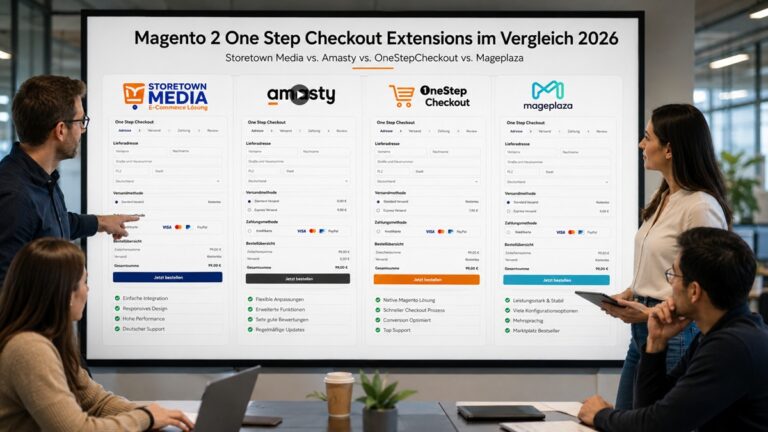
Magento 2 One Step Checkout Extensions in comparison 2026: STM vs. Amasty vs. OneStepCheckout vs. Mageplaza
Last updated: July 2026. All information regarding third-party providers is taken from the respective official provider websites (sources at the end of the article) and is subject to change. We are the manufacturer of…
Magento 9 min.
-

-

-

-

-

-

-

-

Communicate shipping costs and delivery time before the customer asks.
For shops 17 min.
-

-

-

Warranty labels in WooCommerce: What needs to be done by September 27th
WooCommerce 13 min.
-

-

-

-

-

-

Implementing a cancellation button in Shopify: mandatory since June 2026
For shops 10 min.
-

Implementing a cancellation button in WooCommerce: Mandatory since June 2026
WooCommerce 10 min.
-

-

-

-

Hosting under Last: What your shop really needs in November
For shops 12 min.
-

-

-

Christmas business 2026: Why your Q4 will be decided in August
For shops 14 min.
-

-

Does ChatGPT know that your website exists?
SEO 8 min.
-

Is your product data ready for AI agents?
For shops 21 min.
-

-

Agentic Commerce: Definition, Impact, Advantages and Disadvantages
For shops 16 min.
-

How will classic web design change in the AI age of 2026?
For developers 18 min.
-

-

-

-

-

-

How can Renderforest, with its AI tools, be a useful aid in e-commerce?
For shops 17 min.
-

-

-

-

Accessibility in the online shop by 2026: audit, fixes, priorities.
For shops 15 min.
-

Success stories of TikTok users, the best sellers in the TikTok shop
Marketing 18 min.
-

-

Here's how to build your own TikTok shop, step by step.
Marketing 17 min.
-

-

Magento Extension: EU Tax Rate Sync for Magento 2 Community
Magento 11 min.
-

Which jobs in e-commerce are the most lucrative and have the greatest future?
For developers 14 min.
-

-

-

-

-

-

-

-

-

-

-

Migrating WooCommerce to Shopware 6: Step by step and typical pitfalls
WooCommerce 15 min.
-

-

-

Shopware 6 plugins that save you work every day
Shopware 17 min.
-

How AI can predict your sales – Forecasting in e-commerce
For shops 17 min.
-

ChatGPT in customer support – can AI really provide advice?
For shops 16 min.
-

How AI analyzes your checkout and predicts abandoned purchases
For shops 17 min.
-

Why AI is your new SEO team
For shops 17 min.
-

A/B testing with AI – find your best design in minutes
For shops 18 min.
-

How AI builds personalized homepages, dynamically for each visitor
For shops 16 min.
-

-

-

Why font size determines over 12% of your conversion rate
For shops 12 min.
-

-

-

How many clicks does your shop really need before a purchase?
For shops 9 min.
-

How your shop's customer support prevents abandoned purchases
For shops 11 min.
-

-

Why online shoppers ignore your "free shipping" banner
For shops 7 min.
-

Why a charging indicator (spinner) brings more sales
For shops 8 min.
-

3 checkout traps developers accidentally create – and how to smartly avoid them
For developers 7 min.
-

Why shop developers often unknowingly destroy SEO
For developers 10 min.
-

Why online retailers should avoid making customer accounts mandatory
For shops 10 min.
-

-

What online shoppers really think about your shipping costs
For shops 10 min.
-

Why email order confirmations are the best sales lever
For shops 7 min.
-

How colors can influence return rates
For shops 8 min.
-

What online shoppers secretly think about your product images
For shops 9 min.
-

This happens when your shop doesn't have a search field.
For shops 7 min.
-

Retro Webshop: My Date with the 90s – and What We Can Do Better Today
For developers 7 min.
-

Retro websites of the 90s: what shaped them and what is different today?
Marketing 10 min.
-

The invisible trust: Microcopy in the online shop
For shops 8 min.
-

What advantages does Hyvä offer for Magento 2? What exactly is Hyvä?
For shops 8 min.
-

Why online shoppers hate pop-ups, and how you can learn to love them
For shops 8 min.
-

-

Dark Patterns in E-Commerce – Curse or Blessing?
For shops 7 min.
-

How should modern A/B tests be conducted using AI tools?
For shops 11 min.
-

Social proof in online shops: This is why it works!
For shops 7 min.
-

What is Conversion Rate Optimization (CRO)?
For shops 9 min.
-

-

Amazon vs. your own online shop: when does which make sense?
For shops 9 min.
-

-

Why your WooCommerce shop is too slow and how to fix it
For developers 12 min.
-

Newsletter concept that sells: Step by step to a plan that works
Marketing 12 min.
-

E-commerce myths debunked: What retailers believe but are wrong
For shops 12 min.
-

These are the things online customers really expect from you
For shops 11 min.
-

Shop optimization: Mobile first
For developers 9 min.
-

Typical misconceptions about e-commerce that annoy developers
For developers 10 min.
-

Online shop checkout: 3 easier steps to completing your purchase
For shops 7 min.
-

Product images are a key factor for success: Avoid these 3 mistakes
For shops 6 min.
-

Shopware 6 or Shopify: What developers should know
For developers 8 min.
-

How can you spot fake reviews when shopping online?
For buyers 7 min.
-

How to tell if your shop is GDPR compliant
For shops 6 min.
-

When is a shop relaunch worthwhile?
For shops 5 min.
-

-

3 fatal mistakes that will kill your conversion rate
For shops 5 min.
-

Here's how you as a retailer can reduce your return rate.
For shops 6 min.
-

Plugin update needed? Here's how to avoid unpleasant surprises.
For developers 7 min.
-

-
-

Simply explained: What is a multi-source inventory?
Magento 7 min.
-

SEO quick tip: Product texts that sell
For shops 6 min.
-

Why are loading times so important for shop developers?
For developers 7 min.
-

-

-

-

Online shop creation in Hamburg: What it costs and how we work
For shops 5 min.
-

-

-

The 5 best marketing plugins for WooCommerce
WooCommerce 17 min.
-

-

-

-

-

-

-

-

-

-

How can an admin user be added via phpMyAdmin in WordPress?
WordPress 3 min.
-
-
Delete all WooCommerce products in the database
WooCommerce 5 min.
-
Optimize WordPress – optimize wp-config.php
WordPress 3 min.
-

How can I completely uninstall an extension in Magento 2?
Magento 5 min.
-

Delete all products in WooCommerce via PHPMyadmin database
WooCommerce 3 min.
-
-
What's the best way to sell products on Amazon?
Marketing 9 min.
-
Which shop system is best suited for the B2B market?
For shops 17 min.
-
Error message: wp-sleeeps/wp-sleeeps.php on line 26 (Hacked?)
WordPress 4 min.
-
-
How to create configuration items in Magento
Magento 4 min.

Who writes here
 Jan-Hendrik49 posts
 Sophie Maschmeyer40 posts
 Tatjana Lorenzen17 posts
 Tobias Frohmann17 posts
 Marco Rühmann16 posts
 Tim Kroschke10 posts
Continue at Storetown Media
Frequently asked questions about e-commerce
What is e-commerce and how does it work?
E-commerce refers to electronic commerce via the internet. Online shops sell products or services digitally to customers. This is handled through shop systems such as Magento, WooCommerce, or Shopware.
Which shop system is best for my online shop?
The choice depends on your requirements: WooCommerce is suitable for WordPress users, Shopware for German retailers with a focus on B2B/B2C, and Magento for large, international shops with complex requirements.
How much does a professional online shop cost?
Costs vary considerably: A WooCommerce shop starts at €3.500–€5.950, Shopware at €10.500–€18.000, and Magento projects usually start at €20.000. Ongoing costs for hosting, maintenance, and marketing are additional.
How long does it take to develop an online shop?
A standard WooCommerce shop takes 4-8 weeks, Shopware projects 8-12 weeks, and complex Magento shops 3-6 months. The duration depends on the scope and individual requirements.
What are the most important legal requirements for online shops in Germany?
Online shops require a legally compliant imprint, a privacy policy according to GDPR, terms and conditions, a cancellation policy, and a cookie banner. The Price Indication Ordinance and the Packaging Act must also be observed.
How do I improve the SEO of my online shop?
Optimize product descriptions with relevant keywords, create unique content, improve loading times, implement structured data, and build high-quality backlinks.
Which online marketing channels are most effective for e-commerce?
Google Ads and SEO for search engine marketing, social media marketing via Facebook/Instagram, email marketing for customer retention, and Amazon/eBay as additional sales channels.
How important are product reviews for online shops?
Very important! 90% of buyers read reviews before making a purchase. They increase trust, improve the conversion rate by up to 270%, and provide valuable content for SEO.
What is the optimal conversion rate for an online shop?
The average German e-commerce revenue is 2-3%. Top shops reach 5-10%. The rate varies depending on the industry, target group, and price segment.
How can I reduce the shopping cart abandonment rate?
Offer transparent shipping costs, simplify the checkout process, allow guest purchases, display trust signals, and use remarketing for abandoned shopping carts.
Which payment methods should my online shop offer?
In Germany, the most popular payment methods are PayPal (57%), purchase on account (28%), credit card (12%) and instant bank transfer/Klarna. At least 3-4 options should be offered.
How important is mobile commerce (m-commerce)?
Extremely important! Over 70% of shop visits are made via mobile devices, and 50% of purchases are made on smartphones. A responsive design or an app is essential.
What is Headless Commerce?
Headless commerce separates the front end and back end of a shop. This enables flexible, omnichannel shopping experiences and improved performance through modern technologies.
How do I protect my online shop against hacker attacks?
Use SSL certificates, keep software up to date, implement Web Application Firewalls (WAF), perform regular backups, and use secure passwords.
What is PCI-DSS compliance?
PCI DSS are security standards for credit card payments. Online shops must comply with them to offer card payments. The requirements vary depending on the transaction volume.
Are there any e-commerce subsidies in Schleswig-Holstein?
Yes, Schleswig-Holstein offers various digitalization funding programs for SMEs, e.g. the "Digital Transformation" program with grants of up to €17.000 for e-commerce projects.
Which e-commerce agencies are there in Hamburg?
Hamburg is an e-commerce hub with over 200 specialized agencies. The Hanseatic city offers ideal conditions due to its proximity to major online retailers such as Otto, About You, and Jimdo.
How do I find e-commerce developers in the Pinneberg district?
The Pinneberg district benefits from its proximity to Hamburg. Many freelancers and agencies from the region offer e-commerce services. The Pinneberg Chamber of Industry and Commerce (IHK) also facilitates contacts.
Which e-commerce events are taking place in Hamburg?
Hamburg hosts the OMR (Online Marketing Rockstars), K5 FUTURE RETAIL CONFERENCE, Hamburg Commerce Summit and various meetups of the e-commerce community.
Are there e-commerce degree programs in Schleswig-Holstein?
Yes, Kiel University of Applied Sciences, Lübeck University of Applied Sciences, and Nordakademie Elmshorn offer degree programs in e-commerce and digital business. Hamburg University of Applied Sciences also offers specialized master's programs.
Which e-commerce trends will be important in 2025?
AI-powered personalization, social commerce, sustainability, voice commerce, augmented reality for product presentation and same-day delivery are the top trends for 2025.
How does AI influence e-commerce?
AI optimizes product recommendations, automates customer service via chatbots, personalizes shopping experiences, improves pricing, and forecasts demand.
What is social commerce?
Social commerce enables direct purchases on social media platforms like Instagram, Facebook, or TikTok. Products are presented there and can be purchased without switching platforms.
How important is sustainability in e-commerce?
Very important! 73% of consumers prefer sustainable shops. Carbon-neutral shipping, plastic-free packaging, and transparent supply chains are becoming a competitive advantage.
What is Composable Commerce?
Composable Commerce is a modular approach that connects best-of-breed solutions via APIs. This enables flexible, scalable shop architectures.
What distinguishes B2B from B2C e-commerce?
B2B has more complex pricing structures, longer purchasing processes, individual terms and conditions, larger order quantities, and requires features such as customer account management and quote creation.
What B2B e-commerce platforms are there?
Leading B2B platforms include Shopware B2B Suite, Magento Commerce B2B, OroCommerce, Intershop, and SAP Commerce Cloud. The choice depends on company size and requirements.
How do I digitize my B2B sales?
Start with a B2B shop for existing customers, digitize product catalogs, implement self-service portals and integrate ERP/CRM systems for automated processes.
How much does a B2B online shop cost?
B2B shops start at €22.500 for standard solutions. Enterprise projects with ERP integration and custom features cost between €50.000 and €500.000. Ongoing costs amount to 15-25% of the initial investment annually.
How do I integrate my online shop with SAP or other ERP systems?
This is achieved through middleware solutions such as SAP Commerce Cloud, REST APIs, or specialized connectors. The integration synchronizes products, prices, inventory levels, and orders in real time.
From Tornesch for Hamburg, the Pinneberg district and all of Schleswig-Holstein.
STM Smart Checkout vs. Amasty vs. OneStepCheckout vs. Mageplaza: Prices, licensing models, hygiene support & EU cancellation button in a fact-based comparison.
Shop monitoring for Q4: the order rate as the most honest metric, named alarm channels, the runbook for emergencies — and the code freeze on November 13.11th.
AI product descriptions for thousands of items: what Google really demands, how data prevents hallucinations, and which gates stop text garbage.
Using strikethrough prices in a legally compliant manner: what § 11 PAngV requires, why percentages should be calculated from the best price, and where the warning traps of the discount season lie.
Preparing for Black Friday 2026: whether the day is worthwhile, what constitutes an honest offer, and how landing page, countdown, and email sequence work together.
Tradesperson website 2026: the three questions every visitor asks, twelve building blocks from service pages to legal notice — and what drives customers away. With checklist and FAQ.
Christmas landing pages only rank well with advance notice: why the seasonal URL remains in place, when it needs to go live, and how internal linking strengthens it.
Why ERP and shop diverge during the Christmas season: six reasons, the marketplace consequences of overselling and hedging before the season.
Communicating shipping costs and delivery time: what must be stated legally, where the delivery time comes from, and why four sections in the shop contradict each other.
Payment methods in the online shop: which four roles must be filled, how many are too many and what first-time buyers can expect in December.
Connecting JTL-Wawi and Shopware 6: how to set up the JTL-Connector, which data flows in which direction, and which five pitfalls cost time.
The EU guarantee label will be mandatory from September 27, 2026. Here's what you need to do in WooCommerce – and why the green claims part is taking longer.
Load testing for your online shop: Deriving the target load, building a scenario, finding the bottleneck. Four types of tests, the right key performance indicators (KPIs), and what to fix first.
Adobe has released a patch: APSB26-146 closes StyleSmuggler (CVE-2026-75650, CVSS 10.0). What to do now — patch, scan for vulnerabilities, harden.
Microsoft provides a connector for Shopify, but not for Shopware and Magento. This article explains what the standard connector offers and when a custom connection is necessary.
Check the product data feed: GTIN, price, shipping, images, categories, and stock levels. The six common errors that make items invisible.
Search terms, exclusions, Performance Max, brand, measurement gap: five places where shops lose budget in Google Ads — with account check.
Shopify checkout is blocked – but returns are still possible. Here are three options that work with every plan, even without Shopify Plus.
WooCommerce does not provide a cancellation button. This article explains what existing legal text plugins already cover, where the gap lies, and how to close it.
Shopware 6 doesn't include a cancellation button. Three ways to retrofit it, the stumbling block of guest checkout – and what the implementation costs.
Since June 19, 2026, online cancellation must be possible. What the button must be able to do, why a contact form isn't sufficient – and how it works for each shop system.
How a product configurator with photo preview turns vague inquiries into calculable orders: seven practical rules, technology and the BFSG obligations.
Why online stores crash under load: PHP workers, database, cache, and TTFB in the order they fail. Five questions to ask your hosting provider.
Shopify provides a cookie banner, privacy policy, and legal notice field – but not legal compliance. Here's what you need to do yourself for a German online store.
Technical check before the Christmas season: 14 checkpoints from updates and backup tests to loading times under load. Includes a one-day summary.
Preparing for the 2026 Christmas season: the Q4 schedule from August to December with load testing, code freeze and Black Friday on November 27.11th. Includes checklist.
The cancellation button is coming to the checkout: what's behind the requirement for 2026 and how to prepare Magento 2 without disrupting the order flow.
Here's how to check if ChatGPT, Perplexity, and Google AI Overviews are familiar with your content – with an honest assessment of AI crawlers, robots.txt, and llms.txt.
AI agents compare attributes instead of advertising copy. Here's how to check if your product data can keep up – structure, completeness, and machine-readable formats.
Google Shopping, price comparison sites and AI assistants only buy what they understand: why structured product data is now mandatory and where to start.
What Agentic Commerce is and how to make Magento, Shopware, or WooCommerce agent-compatible. Agency near Hamburg, initial consultation free.
Generated layouts, new tools, shifting roles: how AI is changing classic web design and what developers and agencies should prepare for in 2026.
Autosuggest, synonyms, error tolerance, merchandising: four levers that turn the search field into a salesperson. Here's how to optimize your shop search.
Rules check conditions, flows automate processes: how Rule Builder and Flow Builder work together in Shopware 6 and when which tool comes into play.
PayPal Checkout for Magento 2 on one page: The One Page Checkout Extension runs on Hyvä like Luma and integrates Mollie, Adyen, Unzer and Stripe.
INP, LCP and CLS determine ranking and user experience: Here's how to measure the three Web Vitals in your shop and specifically address the typical bottlenecks.
A German payment service is challenging PayPal: what MovePayment offers, where it scores points and what its chances in German e-commerce depend on.
Product videos, logos and mockups via AI: what Renderforest's AI tools can do in everyday shop operations, where their limits lie and when their use is worthwhile.
Mollie vs. Stripe, PayPal, Adyen and Klarna: Card fees, payouts, contract terms and which provider is best suited to which shop. As of October 2026.
Generative engines are changing search: what distinguishes GEO from classic SEO, how AI is shifting optimization, and what matters for your shop now.
Bringing together consent banners, tracking setup and clean key performance indicators: This is how you measure in your online shop in compliance with GDPR, without ending up in data chaos.
Practically addressing accessibility in the shop: assess the current status with an audit, prioritize fixes and implement them – from contrast to keyboard operation.
How TikTok users became successful sellers: Examples from the TikTok Shop and the patterns behind viral products and growing sales.
Connecting Actindo as an ERP and PIM with WooCommerce: product data, stock levels and orders are synchronized – this ensures a stable data flow in everyday use.
From account setup and product listing to the first order: Here's how to build your own TikTok shop and sell directly in the app.
Automatically transfer Magento orders to JTL-Wawi, restore stock levels, prices and tracking: Connector, custom API or batch import compared.
The extension keeps EU tax rates up-to-date in Magento 2 Community: VAT rates are automatically synchronized instead of manually maintaining tables.
From shop developer to data analyst: which e-commerce jobs are worthwhile, which skills count and where demand continues to grow.
Connecting to marketplaces like Amazon and eBay or relying on your own shop: the advantages and disadvantages of multi-channel sales and when it's worthwhile.
When standard shops reach their limits and in-house development pays off: an overview of criteria such as processes, interfaces and peak loads.
Connecting inventory management systems to Magento: SAP Business One, Dynamics 365 and NetSuite compared – which inventory management system suits your shop?
Here's how to manage B2B customers in Shopware: Create tiered pricing, map quantity discounts via rules, and provide customer groups with their own prices.
Automatically synchronize inventory, prices and orders: How to connect your inventory management system to Magento, WooCommerce or Shopware and what matters in the process.
What makes a shop project viable: clear requirements, a suitable platform, and a realistic timeline. Here's how to prepare for the commission.
How to integrate Mailchimp into WooCommerce: from connection to sending – with tips for newsletters that sell without being annoying.
New Year's greetings from Tornesch: a look at the e-commerce year 2026, what retailers can expect and how your shop can start the new year strong.
How to make your shop international: Setting up language versions and currencies in Shopware and Magento – from translation to exchange rate.
Keeping items, stock levels, customers and orders synchronized: This is how you optimize the interface between WooCommerce and ERP/CRM without duplicate maintenance.
Migrating products, customers, orders and URLs from WooCommerce to Shopware 6: process up to go-live, redirection concept and checklist.
Store API, custom frontend, clear interfaces: How to cleanly connect Shopware 6 with React or Vue – architecture and pitfalls at a glance.
Customized pricing, approval processes, and purchase on account: This is how you set up Magento for B2B without slowing down your B2C customers.
Legal texts, SEO, payment methods, automation: a curated selection of Shopware 6 plugins that noticeably shorten routine tasks in everyday shop management.
AI calculates future demand based on order history and seasonal patterns: This allows you to plan purchasing, inventory and advertising budgets proactively instead of relying on gut feeling.
Product questions, order status, complaints: This article objectively examines where ChatGPT excels in support and when humans should take over.
Click paths, form fields, bounce points: AI shows where buyers drop out of the checkout process and reports abandonment risks before the shopping cart is lost.
Keyword research, text creation, internal linking: AI takes over SEO routines and frees up time for strategy. This article explores its applications and limitations.
AI continuously evaluates test variations, redistributes traffic, and identifies winners earlier: Here's how to start AI-supported A/B tests for design and conversion.
Recommendations, banners and product lines adapt to click behavior: This is how AI uses shop data to build a homepage that greets each visitor differently.
Suspicious order patterns, stolen payment data, fake accounts: AI detects fraud attempts in real time before goods leave your warehouse.
Orders, customers and inventory flow from the shop to Dynamics 365 without code: Here's how to set up flows with Power Automate – explained step by step.
Legible font sells: why font size in the shop plays a decisive role in whether a customer leaves or makes a purchase – with practical tips on shop typography.
Three AI tools for online shops put to the test: What Constructor, Claid.ai and Algolia AI can do in Magento, Shopware and WooCommerce – and what they cost.
Search field, product suggestions, smart redirects: This is how your 404 page leads visitors back to the shop instead of losing them in a dead end.
Four to eight clicks from shopping cart to order are realistic. The key is friction: guest checkout, short forms, transparent costs.
Live chat, clear FAQs and quick answers at the crucial moment: This is how your support catches hesitant buyers before the shopping cart is abandoned.
Users who shop with a screen reader want to find, trust, and pay. Twelve areas for improvement, from alt text to keyboard control – with a mini-audit to get you started.
Banner blindness makes persistent advertising invisible. Why your shipping notice gets lost and how it can be effective again with clear terms and conditions in the right place.
A visible battery level reduces stress, prevents double-clicks, and reduces abandoned purchases. When is a spinner appropriate, and when is a skeleton screen?
Mandatory registration, late shipping costs, unclear error messages: three real-world checkout traps – with solutions and a 14-day implementation plan.
Twelve technical glitches that cost you rankings: forgotten noindex directives, canonical chaos, broken redirects. With code examples and a go-live checklist.
Can an online shop force a customer account? What the Data Protection Conference and the Higher Regional Court of Hamburg say, and why guest checkout still sells more.
Which AI tools really save work in online shops: product texts, search, fraud detection and service – with costs, limitations and usage recommendations.
Shipping costs feel like fees to buyers. How to set smart thresholds and clearly communicate shipping costs from the product page to checkout.
Few emails are read as carefully. Learn how to create legally compliant order confirmations, anticipate questions, and encourage repeat purchases – with templates.
If sage green looks like frog green in the photo, it's returned. Seven levers for true color accuracy – from the product photo to the color profile.
Buyers can assess details, dimensions, and usage in images within seconds. Which image types are most effective, how mobile galleries work, and the benefits of image SEO.
Without an internal search function, customers with a clear intention to buy will abandon their purchase. Seven steps for your shop – and how to implement autocomplete, search results, and filters.
A recreated online shop in the style of the 90s, with WebRing, award logos and guestbook – and a look at what shops are doing better today.
A website like in 1995, ready to be clicked through: garish visuals, a fun zone, and a working guestbook. What defined 90s design and what's different today.
Short texts take away the fear during checkout: the most important parts from the shopping cart to the order confirmation, with wording modules and templates.
Hyvä replaces the Luma theme with a streamlined frontend using Alpine.js and Tailwind: less code, better Core Web Vitals – with a migration checklist.
Why pop-ups are annoying and when they are useful: Use triggers like exit-intent strategically, write respectful microcopy – with playbooks and checklists.
Logo, navigation, search: The header determines orientation and trust in seconds. What belongs in the header and how to measure its impact.
What dark patterns are, where the legal limits lie, and what works instead: Designing fair consent, checkout, and subscriptions – with an audit checklist.
Finding ideas, prioritizing variants, accelerating evaluation: This is how you use AI in A/B tests – with a tool overview and a 30-day plan.
Ratings, seals of approval, user numbers: why social validation influences purchasing decisions – with psychology, legal basics and placement tips.
Where shops lose conversions, which tests are worthwhile and what conversion rate is normal in e-commerce – with benchmarks and a calculation example.
From initial signs and immediate measures to cleanup: finding and removing malicious code and securing the shop with patches, monitoring and firewall.
Reach versus margin and customer data: strengths and risks of both channels, decision matrix and a calculation example that makes the margin tangible.
Slow pages, sluggish search, cryptic error messages: seven typical shop problems in problem-solution format – this is how developers fix them cleanly.
Quick diagnosis in ten minutes, then the fixes: Object Cache, Cart Fragments, Image Formats, CDN – this will make your WooCommerce shop measurably faster.
From targeting and segmentation to subject lines, automation and deliverability: the complete roadmap to a newsletter that predictably generates revenue.
Seven myths fact-checked: from "more traffic solves everything" to "free returns are a must" – and what actually works in the shop.
Seven expectations determine the purchase: orientation, loading time, transparent prices and a smooth checkout – with implementation tips for each point.
Mobile users determine ranking and revenue: loading time, stable layouts, tap goals and streamlined forms – this is how you set up your shop for mobile devices.
Twelve misconceptions from e-commerce projects – from "Performance comes later" to "AI builds the shop on its own." This article explains what's really behind them.
Simplify structure, build trust, offer flexible payment methods: three steps to combat abandoned purchases at the checkout – with a practical example and implementation tips.
Poor lighting, busy background, incorrect cropping: three image flaws that deter buyers – with best practices and SEO tips.
From hosting and template engine to API and headless: The comparison shows from a developer's perspective where Shopware 6 and Shopify differ – with a conclusion.
Eight characteristics expose bought reviews: exaggerated praise, repetitions, conspicuous profiles – with examples of real and fake reviews.
Ten points to check: Cookie banner, SSL, privacy policy, double opt-in, order processing – this is how you check your shop for GDPR compliance.
Six signs indicate when a shop relaunch is due – from declining sales to outdated technology. Includes timing tips and a checklist.
Three shop systems in direct comparison: strengths, weaknesses and typical use cases – with a conclusion on which system is suitable for which shop project.
Complicated checkout, long loading times, weak design: three conversion brakes and what helps against them – even one second costs measurable revenue.
Ten measures against returns: precise product descriptions, size charts, videos and clear return rules – plus an analysis of your own return reasons.
First staging, then live: the update checklist for shop plugins with log control, cache reset and monitoring – and when which update is due.
Up to 70 percent of purchases are abandoned before completion. The typical reasons, from hidden costs to mandatory registration – and seven remedies.
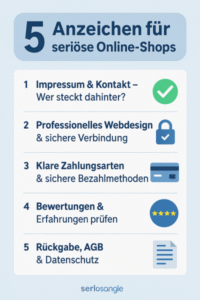
Identify fake shops by five characteristics: legal notice, web design, payment methods, reviews and terms and conditions – with a checklist for a quick test before buying.
MSI manages inventory from multiple storage locations on one platform: how Magento 2 automatically selects the appropriate warehouse using Sources and Salable Quantity.
Five steps to product texts that rank and sell: target group, keyword research, unique content, clear structure and clean meta tags.
Loading time determines whether a user buys or abandons the site: 53 percent of mobile users leave after three seconds. Includes measurement tools and specific optimization tips.
From Warby Parker to Gymshark: six campaigns by smaller shops – influencers, social media, reviews, email and content marketing analyzed in a compact manner.
Joomla can be effectively used as a content management system (CMS) for developing online platforms for presenting and selling local handicrafts and products in Norderstedt. It…
Magento users in Osterhorn can improve customer satisfaction by implementing chatbots and AI-powered customer service tools that are available 24/7 and provide fast and consistent answers to…
How much does an online shop cost? Three price ranges with real figures, the four price drivers and the project process – from an agency in the Hamburg region.
WooCommerce can simplify and accelerate online ordering processes for local organic food stores in Brande-Hörnerkirchen by providing a user-friendly platform that can be easily adapted to the specific needs of the local community…
The following Joomla components are important for managing online community events and meetings for local clubs and groups, whether on-site or at any other location: 1. JEvents: A comprehensive…
Five tools for more sales in your shop: Yoast SEO for ranking, MonsterInsights for analytics, OptinMonster for leads – briefly and practically explained.
Local electronics stores in Langeln can use various Magento tools to manage product reviews and customer feedback online. These tools include: 1. Magento Product Reviews Extension: An extension…
The following Joomla components are important for creating online registration systems for local sports and fitness classes in Kölln-Reisiek: 1. Community Builder or JomSocial: These components enable the creation…
Specification for the online shop: Sample outline with ten chapters to copy, what belongs in each chapter and the difference to the functional specification.
How a requirements specification for a webshop is structured: nine chapters, verifiable formulations and the five mistakes that make shop projects expensive.
Setting up an event management system with Joomla for local events. Integration of online ticket sales and booking plugins into Joomla for local events. Customization of Joomla templates for advertising and…
Integration of survey and voting extensions into Joomla for local elections. Creation of user-friendly election platforms with Joomla for citizens. Use of Joomla's access control lists (ACLs) for secure…
Website, Google business profile, local SEO, reviews and email marketing: the building blocks that make your business visible online and keep it that way.
Six approaches to greater reach: targeted content, ongoing interaction, influencers, hashtags, visual formats, and honest success monitoring.
Why local rankings determine new customers – and how you can score points with a Google business profile, local keywords, reviews and backlinks.
Step by step in the database: new entry in wp_users, password as MD5 hash, admin rights via wp_usermeta – the way to do it if the login is missing.
Custom plugin instead of standard solution: 24 doors via shortcode, discount codes from WooCommerce vouchers, staggered by customer group via the Groups plugin.
SQL route via phpMyAdmin plus WP-CLI and plugin alternative: How to empty the product catalog before CSV import or shop reset – with backup checklist.
Increase speed via wp-config.php: Limit revisions, throttle autosave, set memory limit, disable WP-Cron – with ready-made code lines.
Simply removing Composer is not enough: Magento 2 extensions must be completely uninstalled – including database tables, setup_module and the often missing checks.
Remove all WooCommerce products and their metadata via SQL instead of clicking: using phpMyAdmin – with a backup step and a ready-made statement for insertion.
Magento, Shopify, WooCommerce, BigCommerce, PrestaShop and OpenCart at a glance: Strengths, weaknesses and costs – decision-making aid for your shop project.
From seller account to first listing: which products are worthwhile, what matters in photos and descriptions, how to keep an eye on demand.
Magento, Shopware and Co. in the B2B check: what matters – from pricing logic to ERP integration – and which system suits your business.
If WordPress suddenly redirects to external websites, the wp-sleeps hack is often the culprit. Here's how to identify the infection and secure your online store.
Step by step: Setting up Amazon Pay in Shopware 6, WooCommerce and Magento 2 – requirements, typical pitfalls and the switch to Checkout v2.
Step by step to a configurable product in Magento: Create attributes such as size and color, manage variants, simplify inventory management.
 {% endif %} {% if title and title != "" %}
{{ title }}
{% endif %} {% if excerpt and excerpt != "" %}