
You must inform
An accessibility statement including the four mandatory details from Annex 3 — including the responsible market surveillance authority.
eCommerce web agency from Tornesch and web design Hamburg - online shops, company website creation - Magento - WordPress - WooCommerce


 DE
 EN
Four custom extensions in the Adobe Commerce Marketplace – from the same practical experience as these projects. Marketplace profile
 Complete migration and redesign of Industriearmaturen-Shop24.de
 Magento 2 online shop for the garden trade – Hermann Meyer
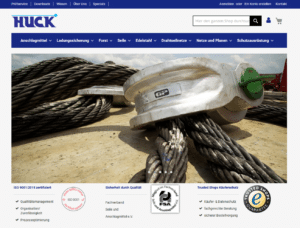 Before & After: Storetown-Media's comprehensive digital strategy for Huck GmbH
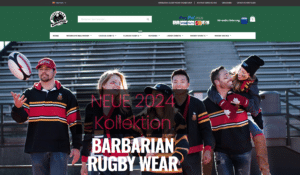 Barbarian.eu Magento 2 ProjectAll Magento references
Our checkout plugin is located in the official WordPress.org directory – reviewed according to its guidelines. View in directory
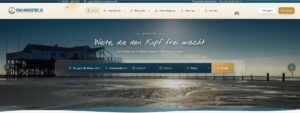 Case study of the booking portal Fewo-Nordostsee.de with WordPress (homey)
 hairdoshop.de – the same shop built in WooCommerce and Shopify
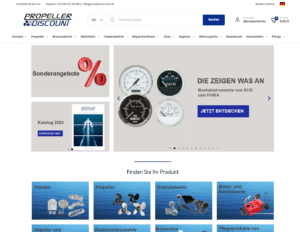 Propellerdiscount WooCommerce Shop Redesign
 WooCommerce wine shop in 3 languagesAll WooCommerce references
Shopware 6 from Tornesch: Switching from Shopware 5, custom themes and integration with the merchandise management system.
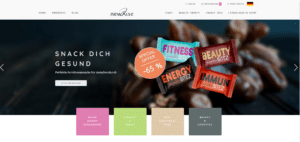 Shopware project newxise
 New Shopware shop
 Magento reference for selling vegan food: Happy CheezeAll Shopware references
Migration of existing shops to Shopify, custom themes and the mandatory German information.
hairdoshop.de – the same shop built in WooCommerce and ShopifyAll Shopify references Company websites and portals based on WordPress – the same foundation on which our plugins are also created.
Case study of the booking portal Fewo-Nordostsee.de with WordPress (homey) Custom WordPress theme for a North Sea holiday home – The Blue House in FriedrichskoogWooCommerce shop for hair extensions – the multilingual hairdo online shop
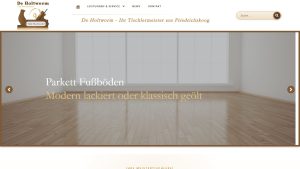 Carpenter's website with WordPress – De Holtworm Carpentry in FriedrichskoogAll WordPress references
 Smart One Page CheckoutFewer abandoned checkout processes
 Product Attachment ProFiles on the product page
 B2B RegisterDealer check & activate
 Surcharge MaxCalculate surcharges flexibly
 EU Tax Rate Sync FreeEU tax rates automatically updated
 Smart Checkout FreeLegally compliant POS for WooCommercePro version
 Barrier guide FreeBFSG review of the actual purchase routeWhat the BFSG requires
 Custom CSS & JS Manager ProCode per page, update-proofFree version
Online shops since 2012
Magento, Shopware, WooCommerce and Shopify – from B2C shop to B2B portal with activation and inventory management.
BFSG · Mandatory since June 28, 2025
We examine your actual purchase process – from the filled shopping cart to checkout and any error messages. We generate the declaration according to § 14 BFSG. And we document every step so you can prove it.
What it's all about
The Accessibility Strengthening Act (BFSG) transposes the European Accessibility Act into German law. Anyone offering goods or services electronically to consumers must make their online shop accessible—and must inform consumers about this.
An accessibility statement including the four mandatory details from Annex 3 — including the responsible market surveillance authority.
The state market surveillance authority for accessibility has been actively auditing since the beginning of 2026 — and asks for documentation, not intentions.
Shops in the consumer goods sector. Micro-enterprises with fewer than ten employees and a maximum annual turnover of two million euros are exempt for services — but not for products.
No tool can make your shop accessible at the push of a button—and anyone who claims otherwise is selling you a risk. Automated rules only meet some of the criteria; roughly two-thirds require human intervention . Our auditor explains for each point whether they have measured it or whether you need to look. This is less convenient than a simple checkmark, but it's the standard that carries weight with an authority.
Concrete
The standard is WCAG 2.1 at level AA, as defined by EN 301 549 for Europe. Some aspects can be measured, the rest require a pair of eyes. Both are described separately and named in the report.
color contrast From text to background, source to source and color pairs, bundled so that 700 reports become a dozen decisions.
Form fields without labels Checkout, search and registration.
Images without alternative text and links without a discernible destination.
Headings that skip a level — including the heading above it.
Unnamed controls, nested buttons, locked zoom on the phone.
Can an order be reviewed and corrected?, before it becomes binding?
Do the cash register's error messages help? — Do they specify which field is meant and what needs to be done?
Does the path to the customer account work using the keyboard?, from the first to the last station?
Are videos subtitled?, are operating instructions not only conveyed through the form?
The plugin guides you through these points, records your verdict with the date — and counts them. not as fulfilled, as long as no one was looking.
Free, unlimited, no account required
Most auditing tools measure a list of addresses—and therefore an empty shopping cart and an empty checkout. These are different pages than the ones where your customers are located.
The difference in five steps
An auditor processing addresses calls up /checkout/ and finds the message: "Your shopping cart is empty." He's measuring a page that no customer has ever used. Our auditor is following the same path your customers take.
A real, purchasable product from your shop is opened and measured — once each in the simple, variable, and reduced versions, because these three construction types produce different forms.
Use the official WooCommerce method to ensure a consistent session and avoid any special treatment that doesn't occur in everyday use.
Quantity fields, remove buttons, coupon field, subtotal — all controls that don't exist on the blank page.
Invoice fields, shipping options, payment methods, mandatory checkboxes. A distinction is made between the classic cash register and the block cash register.
Required fields are cleared and the order button is pressed. The validation rejects the order—no order can be placed—and the error message is measured as if it were received by a customer.
It sits above everything else, yet it's rarely checked. For us, it's what it is: the primary user interface element of your shop.
The mandatory information
Section 14 of the German Federal Training Assistance Act (BFSG) requires not only an accessible shop, but also that you provide information about it. Appendix 3 to the BFSGV specifies what information must be included. It contains four pieces of information, three of which a template cannot possibly include.
The areas that do not meet the requirements are named, not omitted.
The reasoning, and if applicable, the accessible alternatives you offer.
Here we do not state intentions, but facts: the applied standard, date and scope of the last inspection, and each manually assessed criterion with name and date.
Your feedback option and the market surveillance authority responsible for you — not “the responsible authority”, but the one by name.
If a piece of information is missing, the plugin will not generate the statement. This is not a flaw, but intentional: A statement with placeholders appears under your name and is worse than no statement at all. You can publish it as a separate page or include it as a block in your terms and conditions—versioned so that it remains traceable later what was valid when.
Was uns unterscheidet
Annex 3, letters a–d, including the name of the competent market surveillance authority. For Austria, the BaFG version applies.
Mandatory checkboxes, payment method-dependent fields, and tax information are also checked. Your legal text plugin cannot provide accessibility features—we check both together.
We don't inject a toolbar into your shop. Overlays have already resulted in millions of dollars in fines in the US for promising compliance they didn't deliver.
No cloud service, no external audit interface, no telemetry, no customer data in transit. Therefore, the question of a data processing agreement does not arise.
If you don't want to do it yourself
The plugin finds and names the problem. Fixing it is manual work — and we've been doing that on WooCommerce shops since 2012.
We install, run the first full test and go through the report with you — in your words, not in rule abbreviations.
Contrast, keyboard operation, form labels, the cash register. We're working on the root cause within the theme itself, not on a layer on top.
The Section 14 declaration will be completed and published; the action log will continue. You now have something tangible.
What it costs
| Offering | Price |
|---|---|
| Test plugin Unlimited checks, generate explanations, report, basic corrections | 0 € |
| Equipment Installation, initial full inspection, completing the declaration, joint review of the report. | 49 € |
| fix Based on effort, according to the report — you see in advance what needs to be done and how much it will cost. | on request |
"On request" here doesn't mean "we'll take a look." After the initial review, we have a list where each point has a reference, a page, and a rule—and contrasting cases are grouped into color pairs, so that hundreds of reports become a dozen decisions. Based on this, we make an estimate, and you can see why. Experience shows that the majority of the effort lies in just a few areas: the theme colors, the POS forms, and the menu's keyboard navigation. Focusing on just these three often yields better results than working through the list from top to bottom.
All prices include VAT.
Frequently asked questions
For services, micro-enterprises are exempt—those with fewer than ten employees and a maximum annual turnover of two million euros. This exemption does not apply to the sale of products . If in doubt, check rather than hoping for the best.
No, and you shouldn't hire anyone who promises that. The plugin checks, names, and documents. Some issues can be corrected with a single click, but more work requires working on the theme itself.
An overlay places a control bar over your shop and doesn't address the underlying problem. In the US, a provider paid a million-dollar fine for this because the promised compliance wasn't achieved. We don't implement such things.
No. The audit runs entirely within your WordPress installation. There is no cloud service and no telemetry.
A complete scan of a medium-sized shop takes a few minutes. During this time, you can see which page is currently being processed.
It contains the four mandatory details from Annex 3, including the responsible market surveillance authority, and is populated using your actual test data. It does not replace a legal review of your individual case—we strongly advise you to seek such a review.
The market surveillance authority can conduct its own inspections, identify deficiencies, and set deadlines; if these are not met, fines and, in extreme cases, a ban on the product being offered may be imposed. Regardless, trade associations can issue warnings. Those who can document that they are inspecting and rectifying the issues are in a significantly better position in both cases.
There is no legally mandated deadline. However, it's advisable to check after every major change to the theme, point-of-sale system, or payment methods—this is precisely where regressions occur. The plugin will remind you if an update has been performed since the last check.
Are you looking for background information rather than implementation details? Our article "Accessibility in Online Shops — Audit and Fixes " explains in detail how an audit works, what criteria exist, and how to set priorities. This page, however, focuses on implementation.
Which shops
The tester is built for WooCommerce because the checkout process is the most difficult and important part. Everything else—homepage, categories, legal pages, search, error page—is tested the same way on any WordPress installation.
The full suite of features, including checkout process, block pointer, and Germanized interface. This is the scenario we built for.
Page verification, explanation, and log function without WooCommerce. The purchase process steps are omitted and marked as "not applicable," not as passed.
For Magento, Shopware, and Shopify, we conduct manual checks as an agency—using the same standards, just without this plugin. Contact us.
Who is behind it
Storetown Media has been building and managing online shops since 2012 — WooCommerce, Magento, Shopware, and Shopify. The audit plugin arose from this work, not from a market gap: We ourselves needed a tool that measures the cash register with content, because that's precisely where our customers experience problems.
We also offer on-site visits for shops in Hamburg, Schleswig-Holstein, and the Pinneberg district. For all other locations, we work the way e-commerce already works: remotely, transparently, and with documentation.
Checking won't cost you anything. Only once you know what's going on is it worth discussing who will fix it.
 {% endif %} {% if title and title != "" %}
{{ title }}
{% endif %} {% if excerpt and excerpt != "" %}
{{ excerpt | truncatewords: 25 }}
{% endif%}